
Cut to the Heart - Part 1
May 29, 2026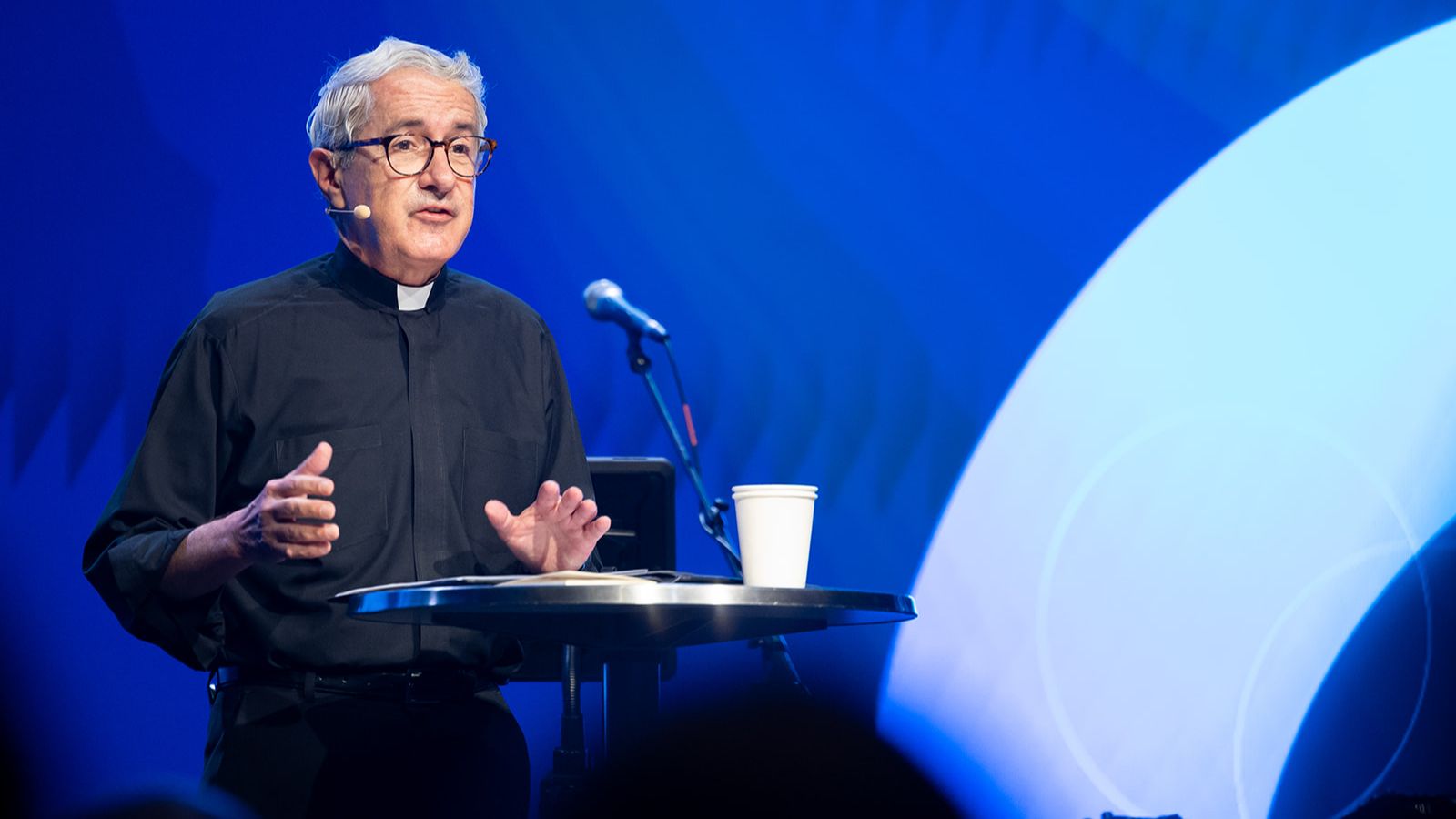
Acts chapter two tells us that on Pentecost Sunday, Peter preached the first homily of the early Church. His message was so effective that three thousand souls were baptized and added to the Church that day. (As an aside, that means someone counted. They cared about numbers in the early Church.) That was some pretty effective preaching and teaching. My favorite verse from that passage tells us:
"Now when they heard this, they were cut to the heart and said to Peter and the rest of the apostles, ‘Brethren, what shall we do?’” (Acts 2:37)
That verse sums up a key objective for our preaching and teaching as parish leaders. Whether preaching at Mass, teaching high school or middle school students, or recording a message for small groups, we want our communication to cut to people’s hearts. We want to communicate so that our audience is asking what they should do or what step they should take in their faith journey. I reflected on the text and made a list of the key elements I thought made Peter’s message effective.
I came up with eight. I’ll share four in this blog and four in next week’s.
One, his words were driven by the Holy Spirit.
Before Pentecost, Peter and the other apostles had gathered together for ten days in prayer. The effectiveness of the message came from prayerful preparation. Notice that preparation does not discount the work of the Holy Spirit; it gives more time for the Spirit to work in our communication. Some preachers and teachers just say whatever comes to them in the moment and claim it is because they are relying on the Holy Spirit. In truth, the same Holy Spirit that can be present with you in the pulpit can also be present while you are at your desk preparing. Prayerful preparation gives the Spirit more time and opportunity to work.
We need the Holy Spirit in our preaching and teaching because there are opposing forces that want to get in the way and confuse our communication. It is only through the power of the Holy Spirit that we can overcome spiritual resistance, overpower the Enemy, and drive away any confusion.
Also, inviting the Holy Spirit into our preparation purifies our hearts. There can be a temptation to make our communication about us and our bright ideas. Prayer helps us to come into the conversation wanting something for our listeners instead of from them.
Two, understand and articulate their objections.
Acts 2:15 tells us that Peter said this to the crowd at the beginning of his message, “These people are not drunk, as you suppose, for it is only nine o’clock in the morning.” It’s funny, but Peter knew what the crowd was thinking and feeling so he voiced it for them. It is amazing how just naming other people’s objections can take away their power. Naming their objections helps your audience know you have considered the subject from their perspective. If you are inviting people to serve, name the objections that people feel like they don’t have enough time or don’t have anything to offer. If you are motivating people to give more intentionally, acknowledge that it can be scary to give a percentage away but that doing so builds trust in God. Acknowledge objections and give some counter arguments to them. It will take the teeth out of their objections.
Three, identify your target audience.
Peter knows he is talking to Jewish people who understand the Old Testament and are familiar with its themes and promises. He addresses them specifically, “You, who are Israelites.” (Acts 2:22) Since that was his target he didn’t have to explain or provide background to biblical references. They also knew Jesus and his reputation as a great preacher and teacher and miracle worker. He could assume their knowledge of him. This impacted the message he spoke.
It is said if you aim at nothing you will hit it every time. It is important for us to know which people we are trying to reach in our communication. Is the message primarily for someone already on the discipleship path or for a new believer? Is it for someone who is skeptical about faith or who already believes? Know your target so that you can craft the details of your message to make the greatest impact. By the way, this is how the Gospels were written. (Mark wrote for the Romans. Luke wrote for a gentile audience. Matthew wrote for the Jewish people.)
Four, find common ground.
Once you know your target audience, you can find common ground. Throughout his preaching, Peter quotes Scripture passages and alludes to biblical stories that all the people in his audience would have known. Speaking to a Jewish audience, he quotes the prophet Joel and Psalm 16. He talks about King David and how so many of the prophecies made to David implied the Messiah would rise from the dead. In pointing to these biblical passages, Peter built a bridge with his audience. He found the common ground, which made what he said all the more credible. We want to choose credible authorities that appeal to the people we are trying to persuade and not just to us.
An example of finding common ground with an unchurched person is to quote people outside the Church. Share research or scientific studies or quote respected secular authorities when they support Church teaching or a biblical world view.
Let’s not just get up and talk or fill time. Let’s pray and work so that our communication cuts to people’s hearts and brings about life change. For more on effective communication, check out our on-demand Equip Course at rebuiltparish.com/preaching-equip-course.
Rooting for you,
Tom
